

Can You Get Global Entry With a DUI? How a DUI Record Affects Trusted Traveler Applications
A driving under the influence (DUI) conviction from years ago rarely comes up again, until you try to get Global Entry and have to put it in writing. A DUI on file doesn’t rule out the application automatically: U.S. Customs and Border Protection (CBP) lists any criminal offense, including a DUI, among the reasons it can deny one. Approval depends on the conviction and the individual review, not a fixed waiting period.
Forums and attorney blogs will give you a specific number of years to wait, and they rarely agree with each other. CBP’s eligibility requirements name the categories of criminal history that can sink an application, which is the more useful place to start than a stranger’s guess about timing.
What CBP Reviews Before You Can Get Global Entry With a DUI
CBP doesn’t publish a yes-or-no checklist for a Global Entry application. A DUI falls under one of three categories that can disqualify an applicant: a criminal conviction or a pending charge, false or incomplete information on the application, and a customs or immigration violation. The Global Entry eligibility requirements don’t rank offenses by severity, so a misdemeanor DUI and a felony both land under the same broad disqualifier.
False or incomplete information is its own problem, separate from the conviction itself. Leaving a DUI off the application gives CBP a second reason to deny it, on top of the first.
The same eligibility requirements also cover a pending criminal charge, an unresolved warrant, and a prior customs or immigration violation. A DUI case still working through court counts as a pending charge, not only as a conviction once it resolves, so the application doesn’t wait for sentencing before it becomes relevant.
Why a DUI Doesn’t End Your Application Automatically
CBP reviews each Global Entry application individually, usually through an in-person interview at an enrollment center. There’s no published rule that says one DUI equals an automatic denial.
An officer reviewing your file looks at the nature of the offense, your record since then, and whatever else the background check turns up. That’s a judgment call made case by case, not a formula with a single input. None of that guarantees approval. It means a person reviews the file rather than a database rejecting it on sight.
The same individual review applies whether the conviction was a straightforward first offense or carried an aggravating factor, such as a high breath or blood reading, a refusal, or an accident. CBP’s eligibility requirements don’t publish a separate tier for any of these. Every case goes through the same review, and the file you bring gives the officer real documentation, not a category label.
Full Disclosure Protects You More Than Silence
A federal background check will likely surface the conviction. Leaving it off the application doesn’t hide it. It gives CBP a second problem with your file: the DUI, and the fact that you didn’t disclose it. Start gathering the case number and the disposition now, before the application asks for them.

How the Timing of the Conviction Factors In
CBP’s eligibility requirements set no lookback window for a DUI. A conviction from last year and one from fifteen years ago both get disclosed on the same application, and the published rules treat them identically on paper.
Forums and attorney blogs will tell you to wait five years, or ten. Neither number comes from CBP’s own page, and nothing on it says a DUI expires.
How to Handle an Arrest, a Conviction, or a Dismissed Case
The application asks about criminal history broadly, so an arrest that led to a conviction gets disclosed without question. A dismissed case, or one reduced to a non-criminal violation, is less clear-cut, and the safer move is to disclose the arrest and explain the outcome. A dismissed case can still appear in a DUI background check, so CBP hearing the full account from you beats CBP finding a gap on its own.
A plea deal reducing the charge to reckless driving or a similar non-DUI offense is the same situation in different words: the arrest happened, a record exists, and the safer path is explaining what the case became rather than leaving CBP to find the original charge on its own.
Expunged or Sealed DUI Records
State expungement rules vary, and some seal a record from most employers while leaving it visible to federal agencies. CBP runs a federal-level background check, which can still surface a conviction that’s expunged at the state level. If you’ve been through DUI expungement, bring the court order and disclose the original arrest alongside it. The expungement itself is proof you completed the legal process.
What Happens After You Apply
You apply online through the Trusted Traveler Programs portal and pay the application fee. A background check runs first. If you’re conditionally approved, you schedule an in-person interview at an enrollment center, and that’s usually where the DUI question comes up directly.
The interview itself is a conversation with a CBP officer, not a hearing. Expect questions about the conviction, what’s happened since, and whether anything else in your background needs explaining. Bring the documents you gathered for disclosure: court records, proof of completed probation, and anything that shows the case is closed.

Once CBP approves your membership, the Global Entry frequently asked questions (FAQ) page confirms your card arrives in the mail and that your Global Entry membership includes Transportation Security Administration (TSA) PreCheck benefits. One membership covers both: faster re-entry at the border and expedited security screening on domestic flights.
TSA PreCheck Is a Separate, Narrower Question
Global Entry and TSA PreCheck get treated as a package, but each one runs on its own published standard, and a DUI reads differently under each one.
TSA’s disqualifying-offenses list covers PreCheck and TSA’s other credentials. It splits into permanent disqualifiers, such as espionage and terrorism-related offenses, and interim disqualifiers tied to a set lookback period. A standard DUI doesn’t appear by name on either part.
That’s the real difference. Global Entry’s standard is broad: any criminal offense, DUI included. TSA PreCheck’s standard is narrow: a named list, and a DUI isn’t on it.
TSA Still Has Discretion
Not appearing on the list isn’t the same as a guarantee. TSA can still deny an application over a broader security concern that isn’t one of the named offenses. A DUI not making the list narrows the risk. It doesn’t remove it.
What TSA PreCheck Grants
TSA PreCheck gets you a dedicated security lane at participating U.S. airports, with no need to remove shoes, belts, or light jackets, and no laptop-out requirement. It only covers domestic security screening. It doesn’t cover crossing the border; Global Entry’s review handles that separately.
More Than One DUI Doesn’t Change the Published Standard
CBP’s eligibility requirements don’t scale by conviction count. The same language, any criminal offense, covers one DUI or several. Multiple convictions give an officer a longer record to review at the interview, and a longer record usually means more documentation to bring: each case’s outcome, any supervision history, and proof every case is closed.
Nothing published changes the review itself because the count is higher. The individual review stays the deciding factor regardless.
Where an Interlock Fits In
Most people reading this far have already handled the part of a DUI that a court or the state’s Department of Motor Vehicles (DMV) controls, which is separate from anything CBP or TSA reviews. That usually means time on a restricted or hardship license, often with a court-ordered interlock already in place.
An interlock doesn’t influence CBP’s review or TSA’s list in either direction. The device logs test results, engine starts and stops, disconnections, location, and tampering, and that record goes to the monitoring authority, not to a federal trusted-traveler decision. What finishing the program does is give you one more piece of paperwork: proof you completed what the court ordered, which is useful background when a Global Entry interview turns to what’s changed since the conviction.
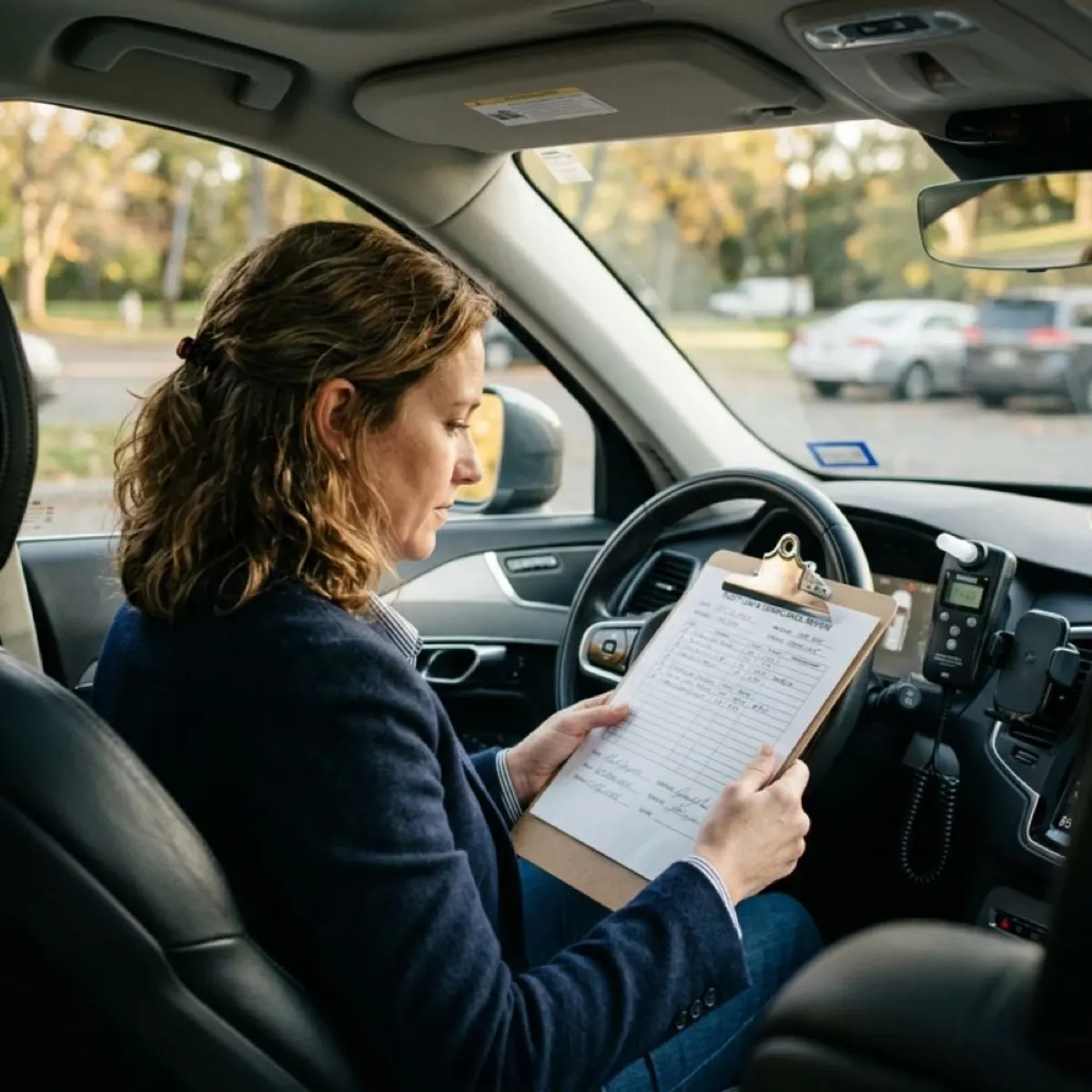
If your case is still active and you’re driving out of state while an interlock is in place, the device travels with the restriction, not with any airport screening. The two are unrelated questions, and nothing about one changes the other.
If a court or your state still requires an interlock, Low Cost Interlock’s DUI programs page explains what a state-certified device, flexible billing, and the Price Match Guarantee include.
Frequently Asked Questions About How to Get Global Entry With a DUI
Each answer below comes from CBP’s and TSA’s own published pages, not from a forum guess or an attorney’s estimate.
Can I Get Global Entry Approved if I Have a DUI?
A DUI doesn’t disqualify you automatically. CBP’s published criteria list it as one reason an application can be denied, not a reason it must be. What you disclose and what your record shows since the conviction shape the review, not the conviction on its own. Bring your court paperwork to the interview, and answer every application question.
Will a DUI Disqualify Me From TSA PreCheck?
Not by name. TSA’s disqualifying-offenses list doesn’t include a standard DUI in either its permanent or interim categories. TSA can still deny an application over an unrelated security concern, so missing from the list isn’t a blanket clearance; the list itself is simply narrower than the one Global Entry uses.
What Disqualifies You for TSA PreCheck?
TSA’s list runs in two tiers. Permanent disqualifiers are serious offenses, such as espionage or terrorism. Interim disqualifiers are specific felonies, barred for a set number of years after the conviction. Neither tier names a standard DUI, and TSA’s discretion covers whatever the list leaves out.
What Are the Disqualifying Offenses for Global Entry?
CBP skips the named-list approach TSA uses. Its criteria read broader: any criminal conviction, a pending charge, an unresolved warrant, a customs or immigration violation, or false information on the application. A DUI falls under the first category and gets the same individual review as any other offense there.
Build a Complete File for a Global Entry Application With a DUI
A DUI complicates a Global Entry application without closing it. CBP reviews every application on its own, and the strongest file is a complete one: the conviction disclosed, the court record attached, and nothing left for a background check to find on its own. TSA PreCheck runs a different, narrower test, and a standard DUI isn’t named on its list.
Court documents showing you finished probation or met every requirement the judge set are stronger evidence at the interview than an explanation alone. If CBP asks you to reconsider a denial, address the specific reason it gave, and show what’s changed since the original decision.
If you still have a court-ordered interlock running while you handle your travel documents, schedule an install with Low Cost Interlock for a state-certified device with flexible billing and no hidden fees.
Disclaimer: This article is provided by Low Cost Interlock for general informational purposes only and is not legal, financial, or medical advice. DUI and ignition interlock laws, penalties, fees, and program requirements vary by state, county, and individual circumstances, and they change over time. Any costs, timelines, or figures mentioned are general estimates, not quotes or guarantees. Nothing here should be relied on as a statement of the law in your jurisdiction. Always confirm current requirements with your state DMV, the court handling your case, a licensed attorney, or Low Cost Interlock directly before making decisions. Product features, pricing, availability, and promotions referenced are subject to change and may not be available in every state Low Cost Interlock serves.